
Qué veras en este artículo
A corporate event agenda is not just a list of times. It is the coordination tool that ensures 15 vendors, 3 speakers, and 200 attendees are in the right place at the right time doing what they are supposed to do.
The difference between a well-built agenda and an improvised one shows on event day: in the first, problems get solved in minutes. In the second, they get solved in chaos.
Recommended Agenda Structure
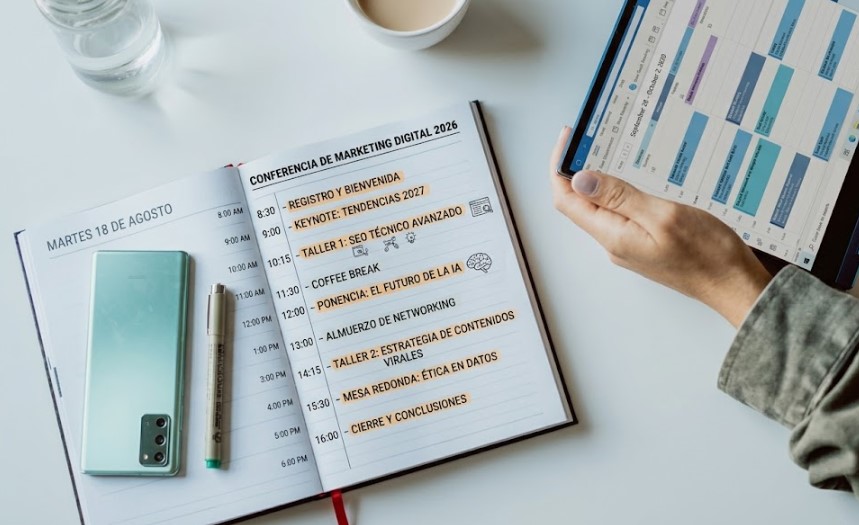
A professional event agenda has two versions: the public one (what attendees see) and the operational one (what coordinators use).
Public Agenda
This goes in the invitation and on the event app or screens. It should be clear, jargon-free, and attendee-focused:
| Time | Activity | Location |
|---|---|---|
| 8:00 am | Registration and welcome | Main lobby |
| 8:30 am | Official opening — CEO | Main auditorium |
| 9:00 am | Keynote: [Topic] | Main auditorium |
| 10:00 am | Coffee break and networking | Terrace |
| 10:30 am | Parallel sessions (Track A / Track B) | Rooms 1 and 2 |
| 12:00 pm | Lunch | Dining hall |
| 1:30 pm | Expert panel | Main auditorium |
| 3:00 pm | Hands-on workshop | Room 3 |
| 4:30 pm | Closing and recognitions | Main auditorium |
Operational Agenda
Used by the coordination team. Same structure with additional columns:
- Responsible: who is in charge of each moment
- Vendors involved: who needs to be ready
- Setup time: how early to be in position
- Plan B: what to do if something fails
- Emergency contact: direct phone of the person in charge
Pre-Event Coordination Checklist
8 weeks before:
- Confirm venue with signed contract
- Draft public agenda
- Confirm speakers and topics
4 weeks before:
- Send formal invitation with preliminary agenda
- Confirm all vendors with contracts
- Define technical needs for each speaker
2 weeks before:
- Receive speaker presentations and run AV test
- Confirm exact attendee count with catering
- Distribute operational agenda to coordination team
48 hours before:
- On-site meeting with main vendors at the venue
- Technical check of sound, lighting, and projection
- Confirm transportation and parking
Event day:
- Coordination team arrives 3 hours early
- Check attendee registration
- 15-minute briefing with all staff 1 hour before
Common Agenda Mistakes We See Most Often
- Blocks longer than 60 minutes without breaks. Attention drops after 45 minutes.
- 45-minute lunch for 300 people. You need at least 75 minutes.
- No buffer between sessions for room transitions.
- Public agenda with exact times that never hold. Use ranges (“10:00 – 10:30”) instead.
Apps That Make Live Agenda Management Easier
- Whova: Real-time agenda, push notifications, attendee networking. Ideal for 200+ person conventions.
- Eventbrite: Simple, attendees already know it. Good for open events or ticketed ones.
- Google Forms + Calendar: The most budget-friendly option. Works for internal events up to 100 people.
- Sli.do: Great for live polls and Q&A during sessions. Integrates with event agenda.
How wink Can Help You
We deliver the complete operational agenda for your event and coordinate every point with all vendors. Write to us with the date and type of event.